

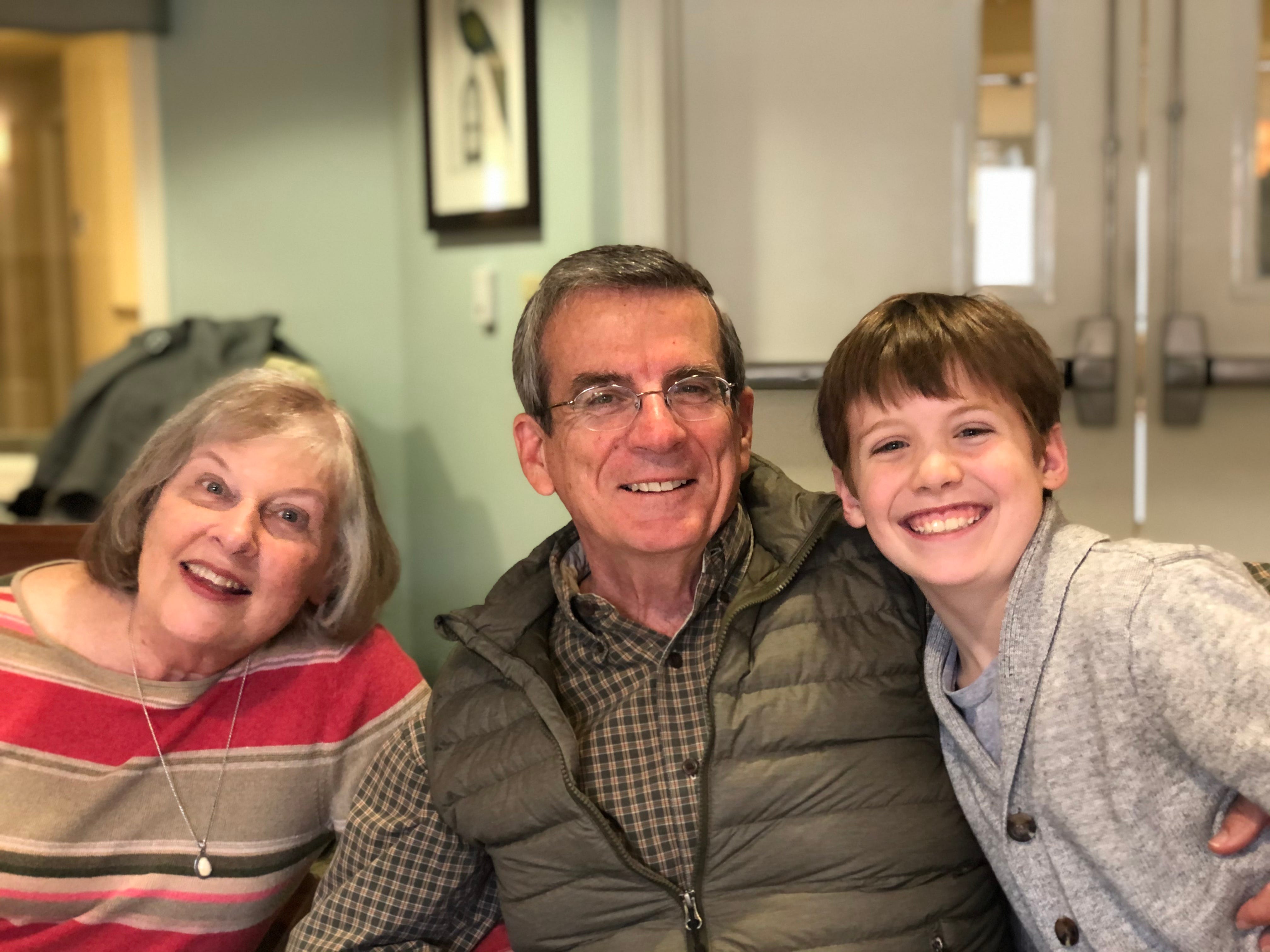
I started this piece in the weeks just after my dad died and, as so often happens with writing and revising and sticking things in a drawer and pulling them back out again, I didn’t finish it for more than a year. It was selected as a finalist in an essay contest but they didn’t publish the finalists, only the winners, so I thought I’d post it here.
“AT LEAST YOU KNEW IT WAS COMING”
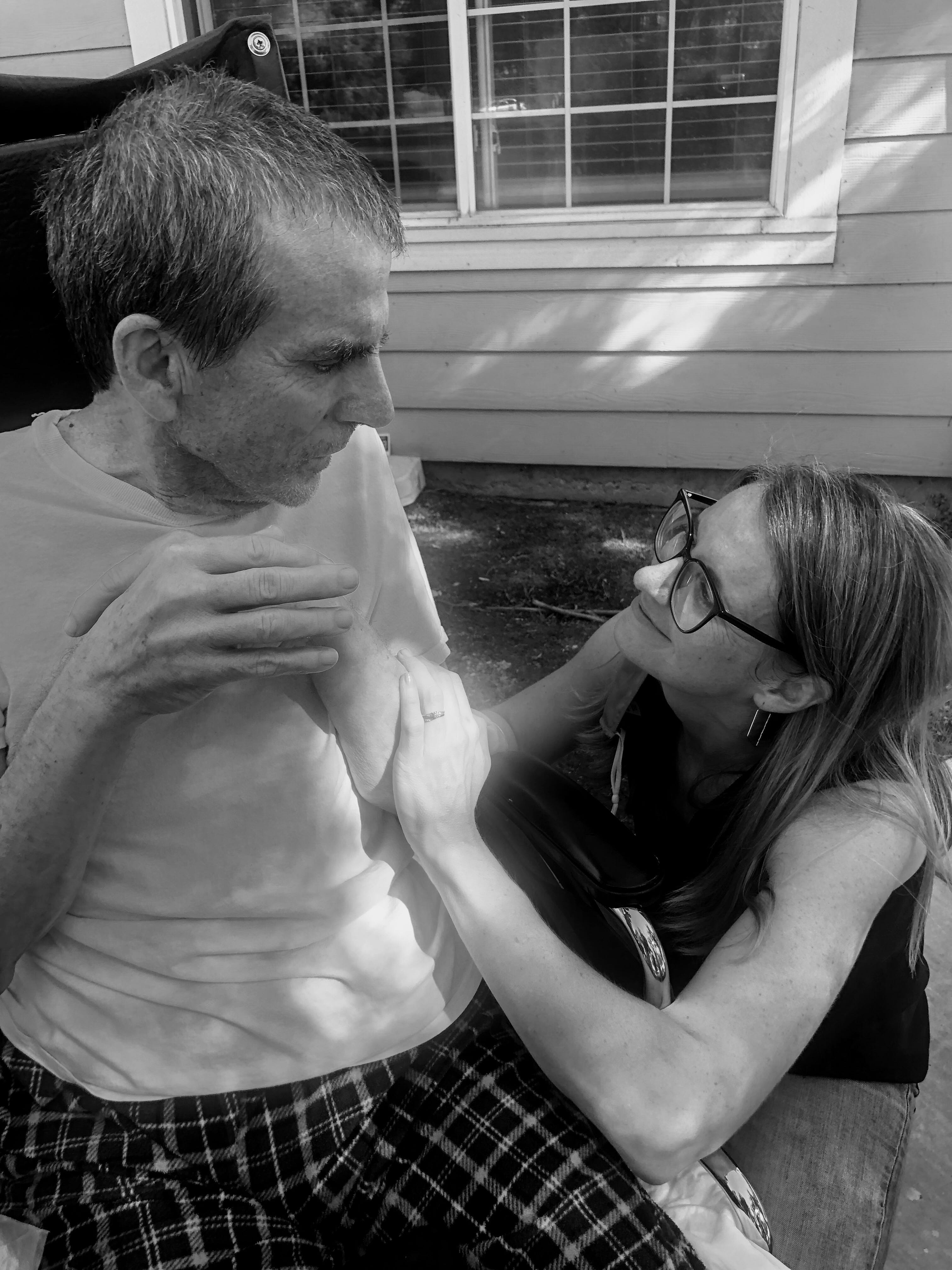
My dad has been dead for 23 days. Nearly a month now. But this is not going to be an essay about grief, or maybe it is, but it’s not meant to be morose or overly melancholy. It’s merely an attempt, my attempt, to articulate what it feels like when someone you love dies after being sick for a very, very long time.
I’m told that when death comes unexpectedly — when, say, an otherwise healthy 41-year-old drops dead on his doorstep from a heart attack, or the phone rings in the middle of the night, or the police show up on your doorstep — the surprise, in whatever form it comes, is a trauma all its own. This makes sense to me.
When my son was 11, we were hit by a drunk driver and our car was totaled. We’d been listening to the audio version of Harry Potter and the Half-Blood Prince and I smiling a little as we drove along the small island highway. I was enjoying the green leaves of the western hemlocks, the red bark of the waving madronas, and the presence of my boy beside me, when, in the span of perhaps two seconds, I realized the oncoming Ford F 150 swerving into our lane was not going to course-correct.
Even now, years later, when I remember the splintering, sickening slam of impact and the explosion of airbags and the screaming of my son, my heart stutters to a strange staccato. How quick, how incomprehensible, how stunning it was. There were injuries but those were soon healed and quickly forgotten. The shock of the experience, however, has required a much longer recovery and the process continues today as I white-knuckle my way through traffic and my eyes dart about, scanning for all vehicular eventualities.
I imagine the news of an unexpected, inexplicable death is something like this. There is the death, and then there is the news of the death; the conveyance; the supersonic sucker punch, the split second on the small island highway when a casual drive turns into destruction and chaos.
That’s not what happened with my dad.
It wasn’t swift or sudden or shocking. On the contrary, it was agonizing in its slowness, like one of those giant Galapagos turtles lumbering in the late afternoon. He started showing signs of Alzheimer’s disease when he was 63 years old and he died four months after his 74th birthday. Much of the time his illness seemed endless. Glacial in it’s drifting toward a different way of being. And many of our friends and family, even we ourselves, took this to mean that the blow, when it finally came, would be easier to bear. Foreknowledge was supposed to mean that we would forego some of the grief.
But it didn’t work that way.
In the end the gradual nature of my dad’s disease did not make the burden less cumbersome to carry. Yet I cannot convey to you, reader, the countless ways that kind and well-meaning friends and acquaintances, in the days and weeks following his death, upon hearing news of my dad’s passing, has waved a hand before I’ve even finished speaking, and said, “Well, at least you knew it was coming.”
I’ll grant that this is technically true. We did know it was coming. Fair enough. I also understand the impulse to resort to such platitudes. If I haven’t said the exact words myself, I’ve certainly thought them.
When I read an obituary I always skim to the end before doubling back to read it in full. Maybe you do the same? I scan it because I’m looking for the cause of death. I want to know how it happened. How old was this person? Why are they dead? Could their death have been prevented, avoided, altered? It’s normal to be curious. The mind wants to make sense of things, to categorize, to minimize risk and pain and loss. Before my dad died I would search for the cause of death in an obituary and sag in relief when I found the words, “following a long illness.”
But understanding that someone is going to die doesn’t diminish the pain of their actual dying. Having time to prepare myself didn’t open a magical trapdoor so I could slide past the painful parts and land in the cushioned contours of supposed closure. Which is really too bad. It would be nice if it did.
We thought it won’t hurt so much if we “prepared ourselves.” I thought so anyway. But it hurt like hell.
From the early days of his disease with his never-ending repetitions of the same tired questions, to the exorbitant donations he started sending to obscure presidential candidates, to the terrifying night-time wandering and the elastic days of his actual dying, the sorrow was unceasing.
Foresight didn’t give us a pass. Foresight meant that, yes, we skipped the shock of a sudden bereavement. This was, I’m sure, it’s own sort of mercy. But because we were granted such a gift, it also meant that we were hurting for eleven endless, arduous years, living in a relentless, repetitive cycle of both anticipatory and actual grief, and then, after all that, he actually went and died on us!
None of this is to say our prescience made it worse. There is no worse. Death is death and a long runway or a short onramp doesn’t change that.
But when we opt for the solipsism of “at least you knew it was coming,” in an attempt, perhaps, to distance ourselves from the discomfort of death, we unwittingly inflict additional pain on someone who is already in agony.
We need new words. New ways of conveying condolence. A simple acknowledgement would probably do the trick. Because even if we don’t know how to handle death or deep sadness, a base acknowledgment would surely be better than taking cover in clichés and banalities like, “at least you knew it was coming.”
We can practice together. I can say: “My dad has been dead for 23 days and we knew it was coming for eleven years.” And you can say: “Wow. Eleven years. What a long time that is to be sad.”
I hear you Nancy. Heartfelt condolences for your loss. Nodding. Dad had vascular dementia, on top of heart failure, rheumatoid arthritis, and bladder cancer; for 5 long years, we had traumatic moments and early grief mixed in with a lot of other emotions—agonising is a good word. Clichés come thick and fast, and first. May I suggest letting them fly in one ear and out the other, they get worse! Sitting alongside you in empathy, holding your hand if I may. Here.